


Forbright Consumer Survey Shows Financial Wellness Starts with Small Steps
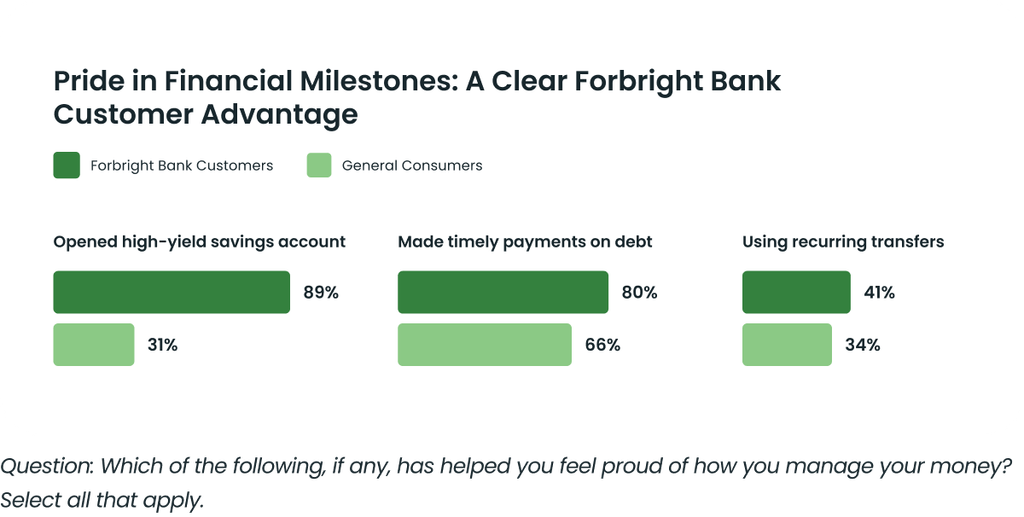
89% of our customers say opening a high-yield savings account makes them proud of how they manage money.

For many Americans, financial wellness is more than having enough money to get by. It’s about having peace of mind and a lifestyle that is free of financial stress. It’s also about feeling confident in financial decisions, prepared for the unexpected, and optimistic about the future.
According to the 2026 Forbright Bank Consumer Money Survey of 3,241 U.S. adults, Americans are building that confidence through simple, consistent habits like saving regularly, budgeting, spending less, and reducing debt. Both Forbright Bank customers and consumers nationwide agree that financial wellness comes from making intentional choices that create greater stability and peace of mind.
The survey reflects a growing shift: People don’t just want material comfort; they want security. And building habits that help people feel secure and in control tends to lead to financial wellness, the survey data shows.
- How Do People Achieve Financial Wellness?
- Why Do Emergency Savings Matter?
- Small Habits, Big Impact Over Time
- Why Do High-Yield Savings Accounts Build Confidence?
- What Are Some Goals That Shape Behavior?
- Who Do You Want to Talk With About Finances?
- How Does Reducing Debt Support Financial Wellness?
- How Can Digital Banking Drive Better Outcomes?
- Financial Wellness Is Built Over Time
How Do People Achieve Financial Wellness?
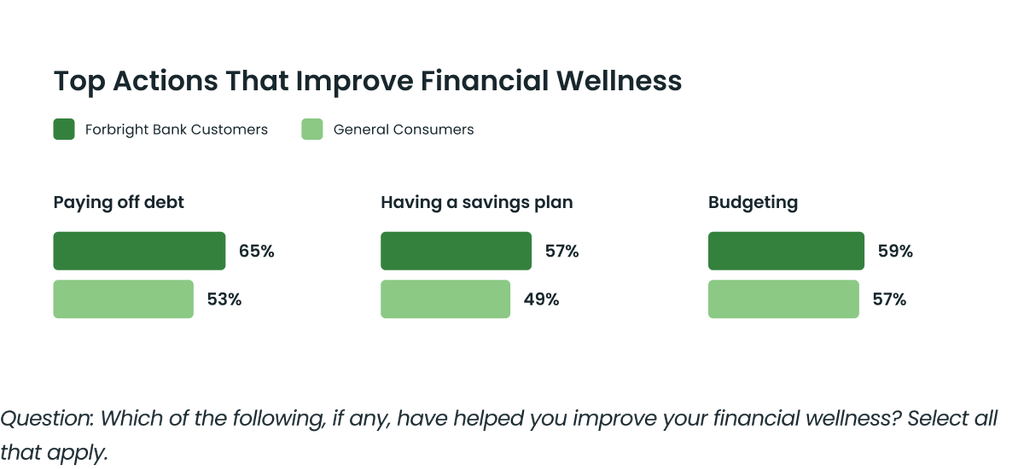
Financial wellness doesn’t require a dramatic lifestyle change. Survey respondents say it’s built through consistent, everyday habits that become part of a long-term routine.
Across both Forbright Bank customers and general consumers, four strategies rise to the top:
- Creating a savings plan
- Budgeting regularly
- Reducing unnecessary spending
- Paying down debt
Many Forbright Bank customers take a proactive approach to these habits. “Everyone should complete a budget and track their spending to compare,” says Forbright Bank customer Don T. “Many will find that they spend more than they realize.”
Why Do Emergency Savings Matter for Financial Wellness?
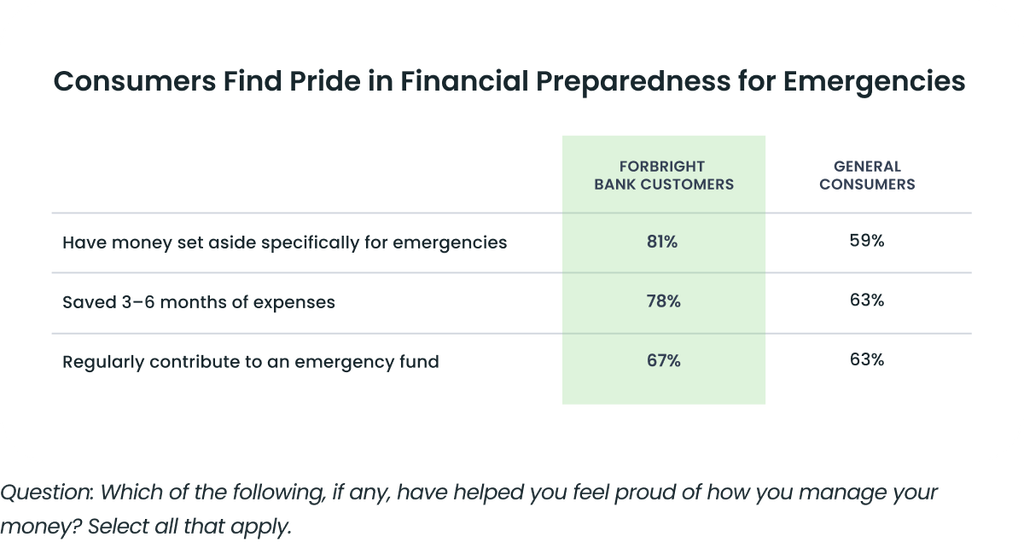
One of the clearest signs of financial wellness is being prepared for the unexpected. Both groups say they feel pride in how they manage their money when they save for emergencies. Forbright Bank customers are actively practicing financial preparedness by doing the following:
- Regularly contribute to an emergency fund
- Have money set aside specifically for emergencies
- Have savings to cover three to six months of living costs
These habits can help reduce stress and provide financial flexibility when life takes an unexpected turn. And while 43% of Americans say they couldn’t cover a $1,000 emergency expense with their savings,1 the survey highlights an encouraging trend: people are increasingly recognizing the value of having a financial safety net. “Have an emergency fund reserved for ONLY emergencies,” recommends Forbright Bank customer Larry G.
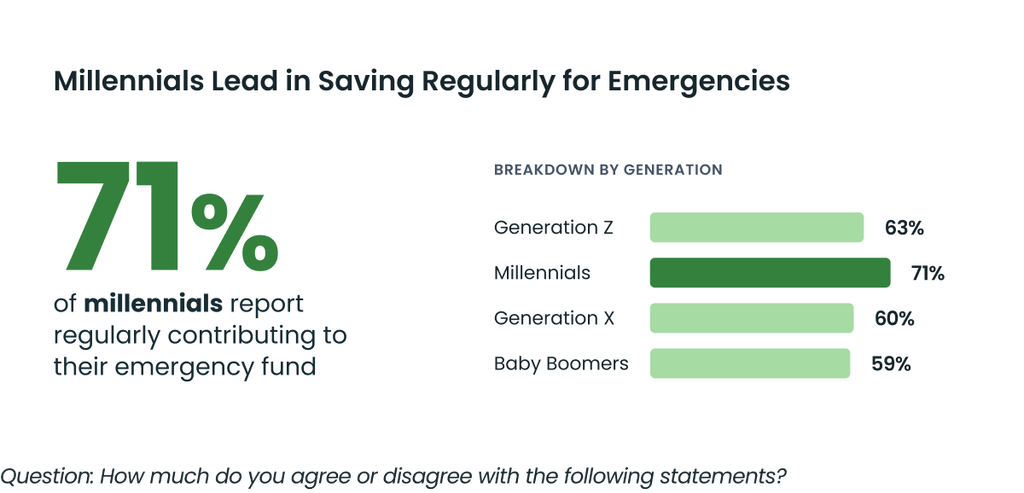
Age also makes a difference in how survey respondents save for emergencies. Among Americans, 71% of millennials regularly contribute to an emergency fund. That’s the highest share of any generation. Coming of age during the 2008 Great Recession may have made them more vigilant about saving money.
Small Habits, Big Impact Over Time
When people think about saving, the approach is often simple:
- Avoid fees by autopaying bills
- Cut back on discretionary spending
- Track expenses
- Set clear financial goals
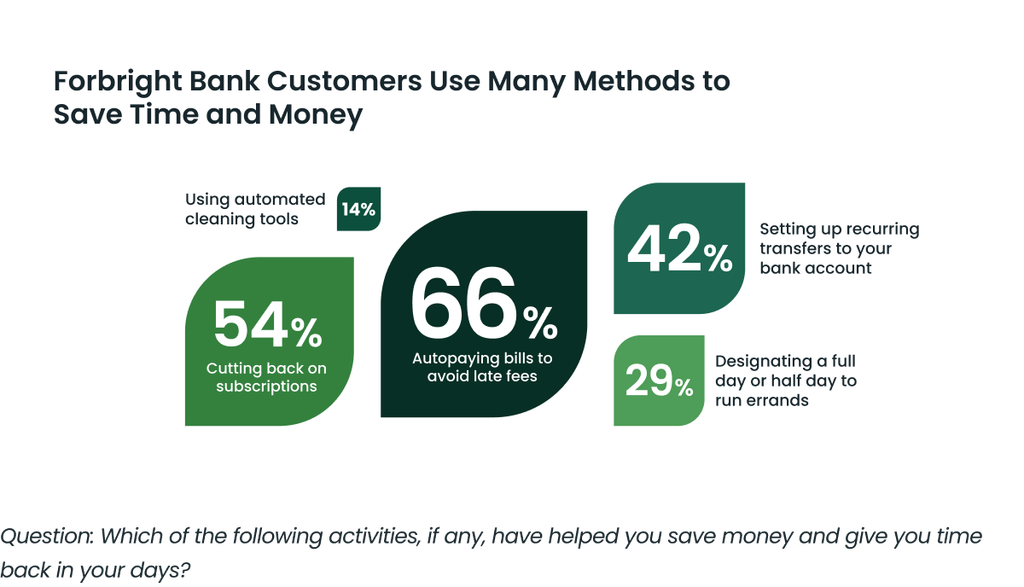
More than half of respondents say they autopay bills to avoid fees and actively reduce discretionary spending to stay focused on their financial goals. Whether it’s reviewing subscriptions, tracking expenses, or setting a savings target, these habits help create room in the budget for future priorities.
Many respondents also embrace environmentally friendly practices that can save money at the same time, including using reusable products, installing LED lighting, conserving energy, and reducing waste.
There may be ways to reduce your expenses that you haven’t considered before, notes Forbright Bank customer Ryan M. “Don’t take any expenses as a given,” he says.
It’s a simple reminder that even small spending decisions can support bigger financial goals.
Why Do High-Yield Savings Accounts Build Confidence?
For both groups, one step stands out as especially empowering: opening a high-yield savings account like Growth Savings. “ALWAYS set a per-paycheck amount to be deposited into a high-yield savings account,” recommends Forbright Bank customer Stevie S. “Do not deviate from this goal.”
Opening a high-yield savings account consistently ranks as a top source of pride and reflects a sense of responsibility, reinforcing the idea that where you put your savings matters just as much as how much you save.
This has been especially true for Forbright Bank customers. In both our 2025 and 2026 surveys, more than eight in 10 survey respondents said opening a Growth Savings account made them feel proud of their financial habits, highlighting the emotional impact of smart financial decisions.
That sense of accomplishment reflects the confidence that comes from creating a plan and watching your savings grow.
What Are Some Goals That Shape Financial Behavior?
Across both groups, savings goals are most focused on:
- Retirement
- Emergency funds
- Vacations or life events
These goals reflect a balance between preparing for the future and enjoying the present.
Forbright Bank customer Nadine D. recommends being proactive about turning goals into structured plans. “Implement a strategy of reduced discretionary spending paired with an automatic biweekly transfer into a designated savings account,” she says.
Who Do You Want to Talk With About Finances?
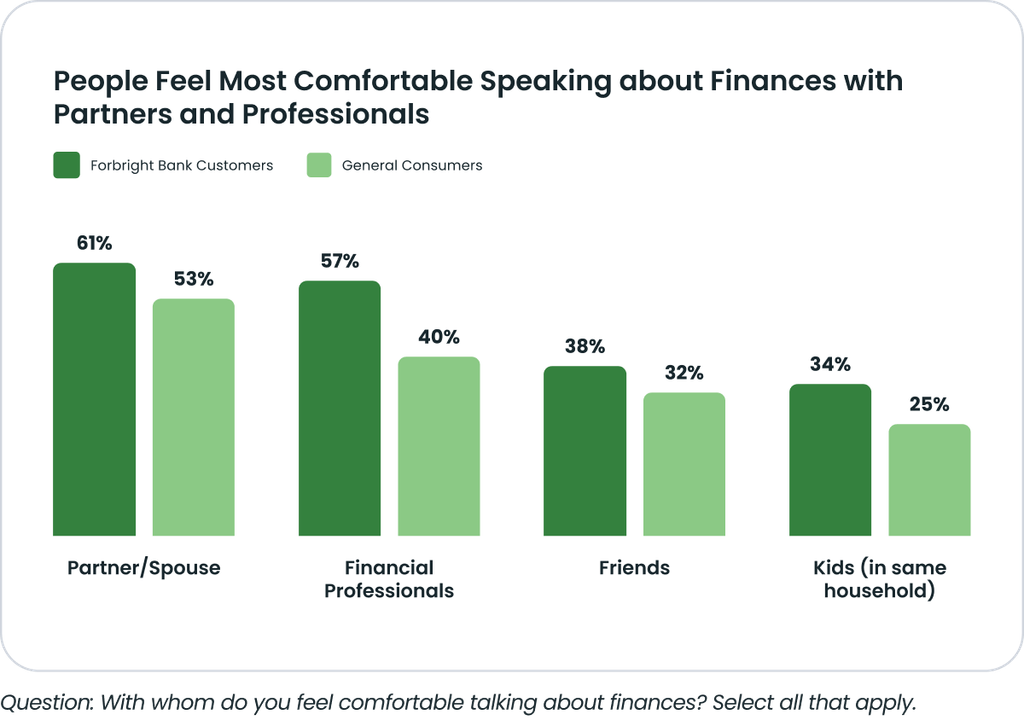
When asked who they feel most comfortable with speaking about finances, respondents of both groups choose two groups: partners/spouses and financial professionals. This is not surprising when you consider that partners/spouses often have joint finances, and financial issues may affect them both. People may feel comfortable speaking with financial professionals about money since they represent an objective party and can offer expert advice.
Children are an entirely different matter. Only 28% of Forbright Bank customers and 20% of general consumers say they feel comfortable talking with their children about finances, highlighting an opportunity for more open family conversations.
Many parents may want to protect their children from financial stress or worry. While this concern is understandable, avoiding the topic of money altogether may mean missing valuable teaching moments that could help kids develop smart financial practices, like how to budget and save.
“As soon as my daughter got her first job at the age of 20, I pushed her to start saving for retirement,” says Forbright Bank customer Alissandra K. “She’s set aside 10% of every paycheck since, so I’m hopeful she will have what she needs when her own retirement comes.
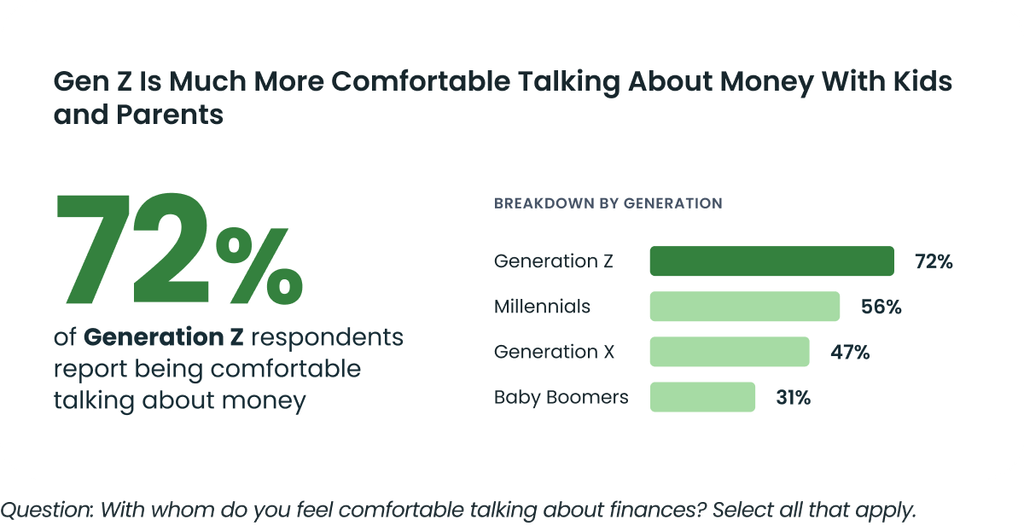
Interestingly, people of different ages seem to feel comfortable discussing money with different groups. While survey respondents from older generations have anxiety talking about it with kids and parents, that discomfort diminishes as respondents get younger.
Younger generations may face different financial pressure than older ones, such as starting their careers and families amidst a higher cost of living. They may depend on their parents for financial help. It’s also possible that younger people, who have grown up with social media, may be more comfortable being transparent about their lives in general. For those who are comfortable, talking about finances might be a way to lower stress and anxiety.
How Does Reducing Debt Support Financial Wellness?
Reducing debt remains one of the most impactful and widely recognized steps people take toward financial wellness.
A majority of respondents say paying off debt directly improves their financial wellness.
“Don’t carry debt outside of a mortgage and potentially student loans,” says Forbright Bank customer Raymond D. “And pay them off ASAP!”
Respondents widely recognize that owing money is a financial and mental burden, and that less debt can translate to lower stress. They also know that debt may come with fees, penalties, compounding interest, and other charges that can become a vicious cycle.
They also understand that reducing debt results in fewer fees and an ability to save more money to build the future they want.
How Can Digital Banking Drive Better Outcomes?
The 2026 survey results show that consistency creates the biggest difference. To save regularly, respondents like to:
- Use autopay
- Set up recurring transfers
- Stay consistent with savings contributions
These actions help reduce friction and make saving easier, so progress continues even during busy or uncertain times.
“Always set aside money by automatically moving it to a savings or investment account,” Karen B., Forbright Bank customer, recommends.
Financial Wellness Is Built Over Time
The 2026 Forbright Bank Consumer Money Survey shows that financial wellness is built through consistent habits that support long-term goals and provide greater peace of mind along the way.
Whether it’s building an emergency fund, paying down debt, automating savings, or opening a high-yield savings account, small actions can create meaningful progress over time. Start where you are, stay consistent, and celebrate progress along the way as you build greater financial wellness for years to come.
“My mindset is to minimize spending, pay off debt, and save money in a high-interest savings account,” says Forbright Bank customer Casey M.
By making consistently positive money decisions, survey respondents say they can build confidence and peace of mind.
METHODOLOGY:
Forbright Bank’s 2026 Growth Savings Customer Survey was conducted by Qualtrics via email during April and May 2026. A total of 3,241 respondents included 1,389 Growth Savings customers and 1,852 general U.S. consumers. References to generations are based on U.S. Census definitions of Baby Boomers (born 1946 to 1964), Generation X (born 1965 to 1980), Millennials (born 1981 to 1996), Generation Z (born 1997 to 2012).
1 https://www.usnews.com/banking/articles/2026-financial-wellness-survey
Disclaimer: This article is for general information and education only. It should not be considered financial or tax advice.